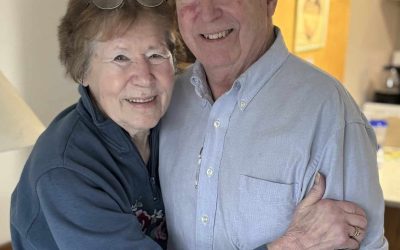
Leah Pack did not come to Summit Square because she was finished. She came because she was planning.
At 82, Pack has lived long enough to know the difference between an ending and a transition. She has also spent a lifetime watching what happens when people wait too long to prepare for either. Her husband, Bob, died last spring at 94 after a rapid decline that collapsed years of anticipation into a matter of weeks. One week in the hospital. Five weeks in health care. Decisions made while grief was still finding its footing.
Grief, she learned again, does not arrive alone. It brings logistics. Paperwork. Disorientation. A dulling of attention that makes even the familiar feel uncertain.
“Any gray matter you have left becomes fuzzy,” she said.
Her move to Summit Square was not reactive. It was deliberate. Years in the making. Pack had watched friends age through systems that required repeated moves as needs shifted and finances tightened. Independent living. Assisted living. Nursing care. Each transition meant a new room, new routines, new caregivers, and new invoices. The disruption was often described as manageable. In reality, it rarely was.
“Everybody thinks that’s a snap,” she said. “It’s not.”
Pack’s sensitivity to systems and their shortcomings was shaped early. She graduated from Madison College in 1966 with a degree in home economics education at a time when public schools were only beginning to address students they had long overlooked. Special education was still being defined. Federal mandates were emerging. Programs were being built in real time.
She taught adults at Woodrow Wilson Rehabilitation Center, including men recovering from strokes, paralysis, and incarceration. Later, she became Staunton City Schools’ first full time special education teacher at the high school level, building a program where none had existed. Eventually, she moved into administration, serving as the district’s special education director.
Her leadership was rooted in proximity. She believed in visiting classrooms rather than auditing them. In watching teachers work until her presence felt ordinary rather than performative. In offering encouragement quietly and correction gently. People, she believed, function best when they feel seen rather than measured.
That instinct followed her into retirement.
Pack retired early, in part because her husband was thirteen years older and she wanted time that still felt unhurried. He was an engineer who loved infrastructure. Roads. Bridges. Systems that, when built well, carry people forward without calling attention to themselves. Together they built and sold homes, traveled often, and eventually downsized.
When his health declined, they had already made a deposit at Summit Square. That planning mattered. It allowed them to remain together through catered care rather than being split between settings and invoices. Pack paid attention. She watched how care functioned when it was coordinated and how much suffering was avoided when transitions were minimized.
It affirmed what she already believed. Independence is not the absence of help. It is the ability to receive the right kind at the right time.
After her husband’s death, Pack found she could no longer concentrate long enough to read books. This unsettled her. She had always been a reader. But grief rearranges attention.
So she turned to poetry.
She traced that love back to first grade in Luray, where a teacher pulled down the classroom blinds every Friday afternoon and read James Whitcomb Riley aloud to a quiet room. Poetry did not demand endurance. It asked only for presence. A few lines. A pause. An opening.
At Summit Square, Pack began attending a creativity group where residents gathered to knit, stitch, and sit together without expectation. From those afternoons, an idea emerged. Not a book club. Not an assignment. Just a place for language.
The poetry group had no rules. Participants could bring poems, letters, song lyrics, or nothing at all. They could read or simply listen. Nine people came the first week. Some shared poems shaped by grief. Others brought childhood favorites. One resident read aloud with such gravity that the room fell completely still.
What made the group work was not expertise. It was permission.
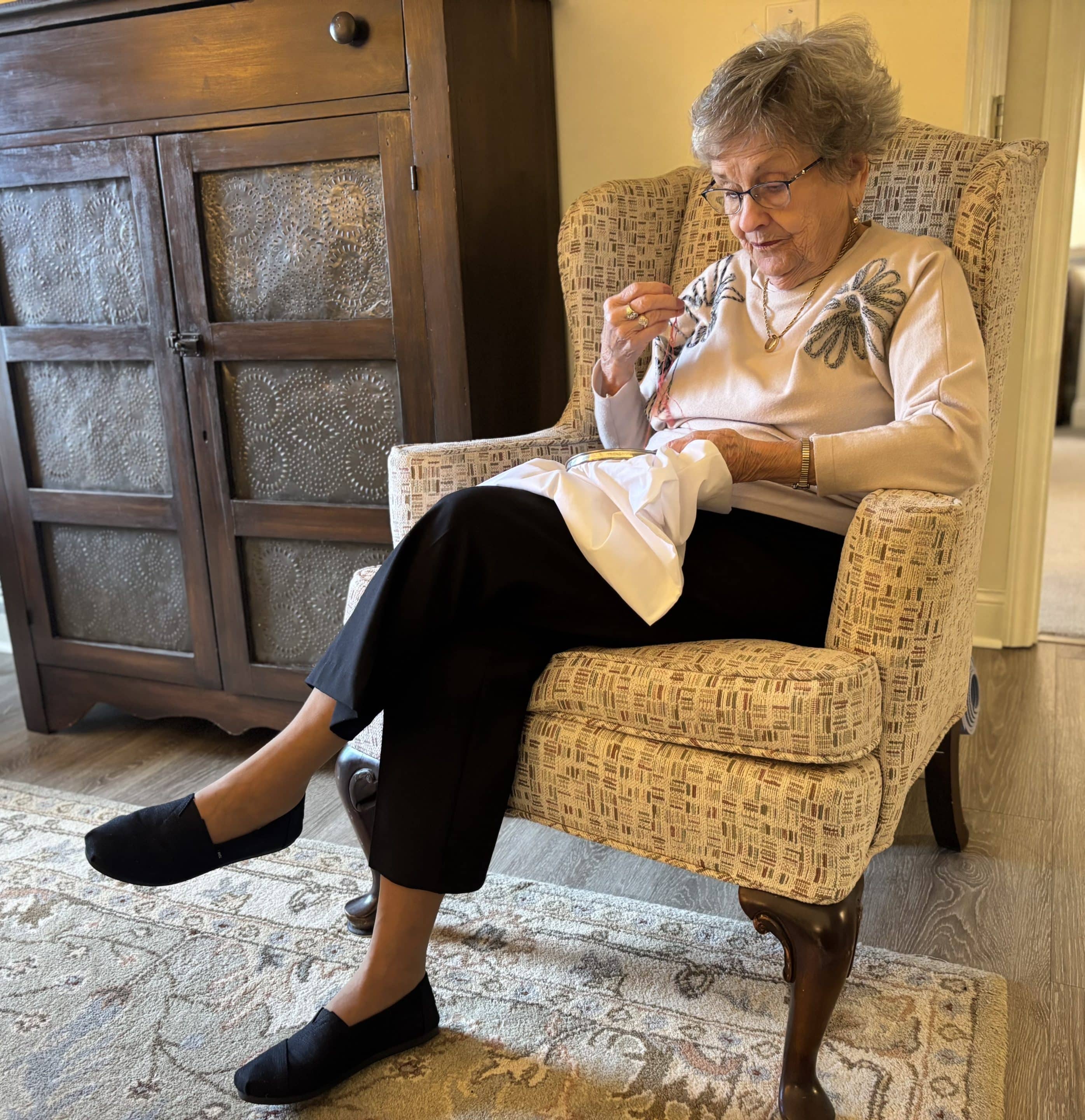
At 81, Pack is still learning. She recently went kayaking for the first time. She is relearning how to knit. She embroiders. She builds routines that make weekends feel less long. She meets friends she has known for decades and acknowledges, without sentimentality, how difficult it is to recreate that depth quickly.
“You don’t invent a fifty year history with somebody,” she said.
But she also knows this. You can begin again without pretending it is the same.
What Pack values most about life at Summit Square is not programming or amenities. It is the way independence is supported rather than rushed. The way care is available without being imposed. The way people are allowed to remain themselves even as their needs change.
Some mornings, she admits, she wakes up and wonders what she is doing here. Then she remembers the planning. The continuity. The relief of staying in one place while life rearranges itself around you.
And on Sunday afternoons, when poetry fills a quiet room, she remembers something else too.
That becoming does not end simply because the chapters are longer now.