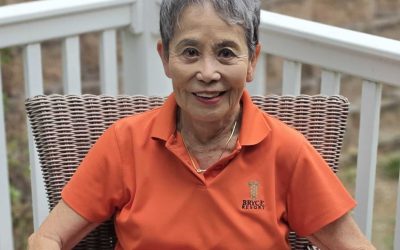
If you did not know Bob Frank was 97, you would never guess it. He speaks with wit and humor, his mind moving quickly from one idea to the next. He knows a lot about a lot of things. History, investing, baseball, people. He listens closely, remembers details, and delivers stories with a humor that lands just when you least expect it.
Bob has lived long enough to see the world change many times over, but he has never stopped paying attention to it. Curiosity has stayed with him. So, has his sense of humor. Sitting with Bob feels less like an interview and more like a conversation you do not want to end.
From there, his story unfolds the way good stories do. Not in a straight line, but through memory, laughter, and the quiet moments that shaped a life well lived.
He was born in New Jersey in 1929, the same year the country slipped into the Great Depression. When Bob was ten years old, his family moved south to Martinsville, Virginia, following the first steady work his father could find. Martinsville became the place that raised him. It gave him his footing, his people, and his sense of home.
Baseball was his first love. He played throughout high school and junior college and was good enough to earn a tryout with a St Louis Cardinals farm team in Lynchburg. They offered him a minor league contract. It was real and within reach. But by then, Bob was already thinking about something else.
Martha.
Bob met Martha while working at the Reeves Theatre concession stand. He still likes to joke that he always charged her full price. They married in 1949. Bob remembers the length of their marriage down to the day. Seventy three years, three months, and twenty days.
On their wedding day, Bob went home from the church to change clothes. His brother in law offered to drive him. Somewhere along the way, they stopped in the middle of the woods. True to his prankster nature, the brother in law tied Bob up and left him there. Bob laughs now when he tells the story, saying he was kidnapped on his wedding day. He was not tied very tight and managed to get himself loose in about ten minutes, but his mother in law was furious. Martha, though, took it in good spirit. Bob still has a photograph from that day. It remains one of his favorite memories.
Bob chose marriage over baseball. He chose steadiness over uncertainty. He never signed the contract, though he played semi pro ball on weekends for several years. Eventually, life carried him forward and he let the game go without regret.
Bob built his career with the telephone company, working first in Martinsville and later transferring to Charlottesville. He worked hard and admits now that he probably worked too much. Still, he provided. When the company reorganized, Bob retired early so a younger colleague with children could keep his job. He walked away at 56, ready for something different.
That next chapter surprised him. Bob had bought his first stock in his early twenties, borrowing money from his aunt at a time when most people around him did not even understand what stock was. Over the years, investing became both discipline and companion. Bob has now lived more than forty years in retirement, supported by his own decisions and his lifelong curiosity. He still manages his investments himself. He still pays attention.
Bob and Martha adopted two children after learning they could not have biological children. Their daughter came to them as an infant on New Year’s Eve in a Richmond hotel. Their son was adopted at seven weeks old. Years later, their son was killed at nineteen in an unsolved homicide. It is a loss Bob carries quietly, one that reshaped everything that came after.
In 2011, Bob and Martha moved to Summit Square. They toured other communities, including King’s Grant, and people still joke with Bob about why he did not choose to live closer to Martinsville. Bob laughs when he answers. He says the problem with King’s Grant was that he already knew everyone. Martinsville will always be home, but Summit Square offered something different. A fresh start. The Valley itself captured their hearts, and Summit Square felt just the right size. Small enough to feel known. Large enough to feel new.
Bob thought he might live there five years. He has now been there nearly fifteen.
Step into Bob’s office and you will see what matters to him. On the wall are photographs of Summit Square staff. Faces he sees every day. Faces he trusts. Among them is Sara Johnson, the first face most people meet at Summit Square. Bob watched her grow up. He talks about her the way a grandfather might. She has become, in his words, an adopted granddaughter.
There are other photographs too. Dining staff who took Bob out for ice cream after Martha died. Simple kindnesses offered when he needed them most. Bob keeps those faces close. They remind him that grief does not have to be carried alone.
Bob believes Summit Square added years to his life. He believes connection matters. He believes curiosity keeps you alive. He believes laughter is necessary and that you should never go to bed angry.
Bob Frank has lived nearly a century. He has known joy and heartbreak, chance and choice. He has traveled the long way and arrived somewhere that feels like home. And if you sit with him long enough, you may find your story woven quietly into his own.