-

- Sisters, Carolyn and Betsy, with their dad.
-
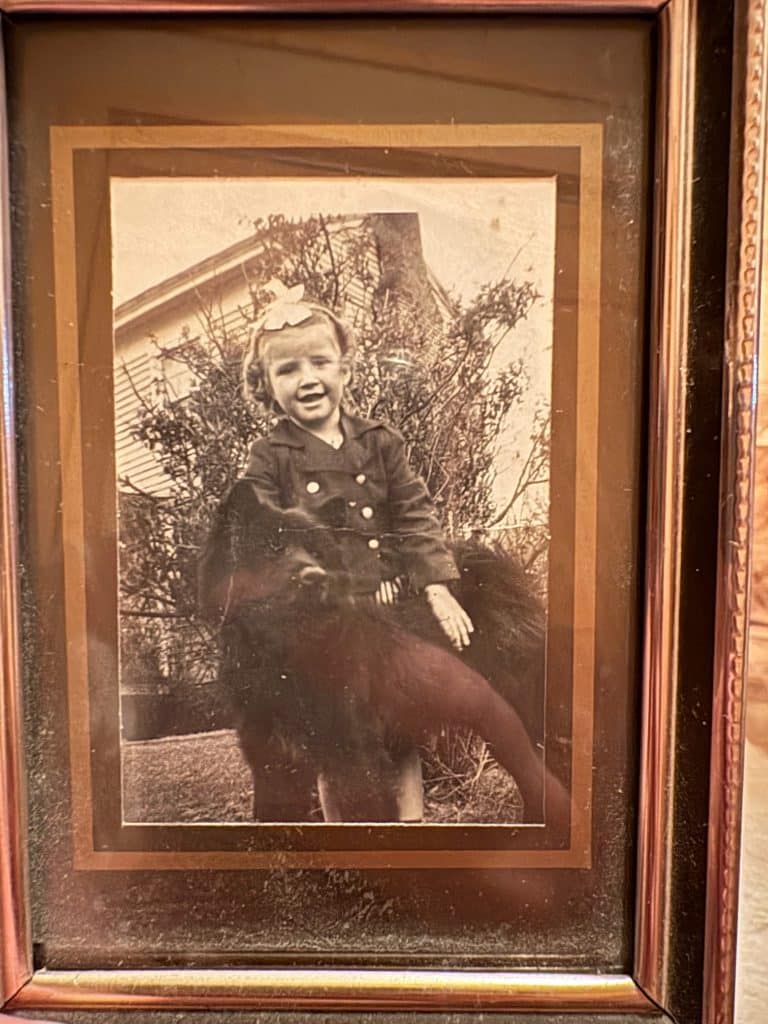
- Anne as a child
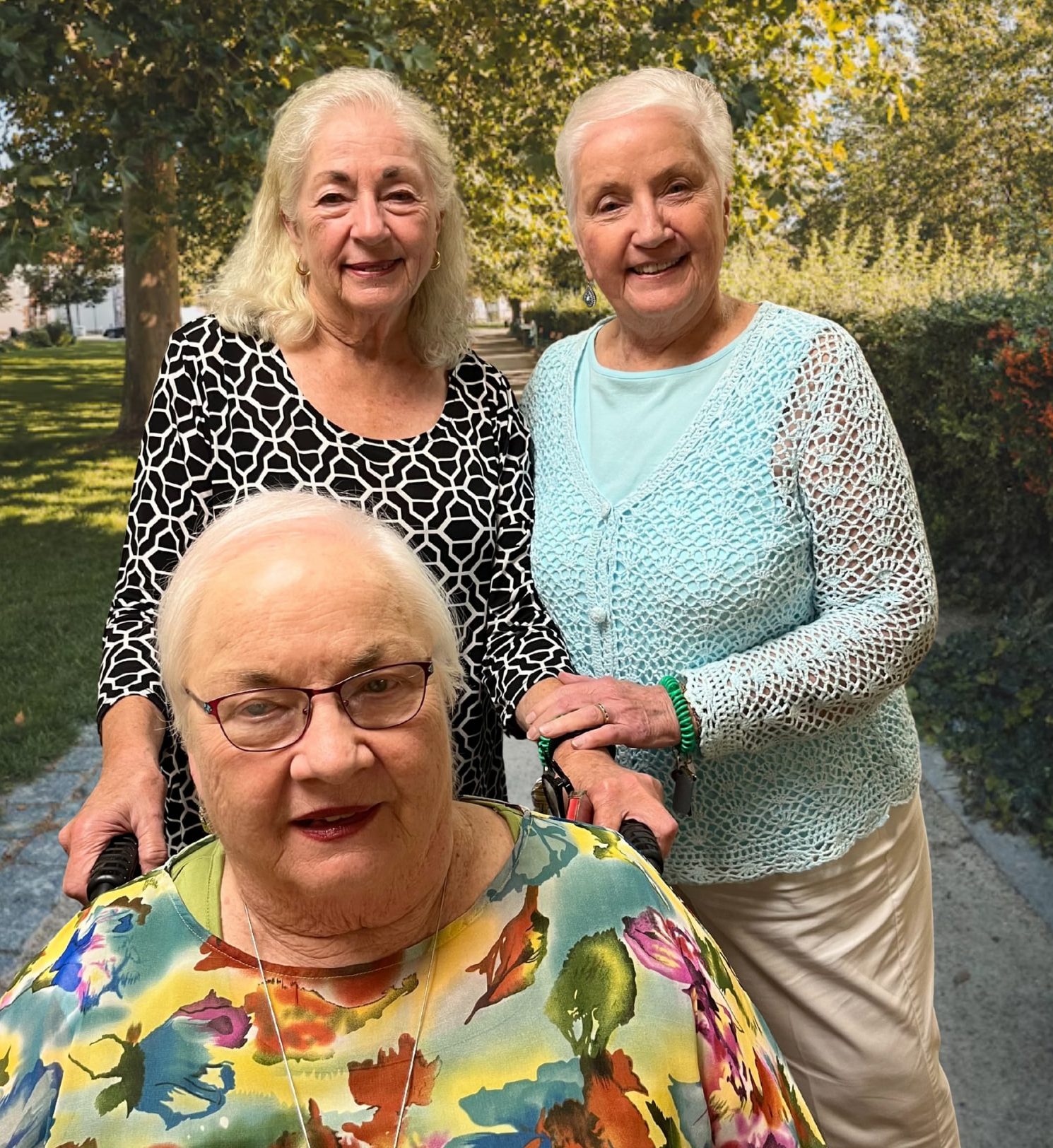
On a warm Virginia afternoon, sunlight streams through the wide windows of King’s Grant, pooling in golden rectangles across the carpeted halls of the first-floor residential apartments. Down the corridor, three women walk side by side—Betsy Ivey, Anne Draper, and Carolyn Turner—sisters who have known one another longer than anyone else ever could. Their steps are unhurried, their conversation an easy mix of gentle teasing and the kind of companionable silence shared by people who have spent a lifetime together.
Many at King’s Grant know their story—and for good reason. After years apart, building careers, raising families, and weathering life’s triumphs and trials, the sisters now share the same floor in the same Life Plan Community. Their decision is equal parts practicality and poetry: in this season of life, they have chosen to live side by side once more.
Roots in Oak Level
Their story begins in Oak Level, Virginia, in a modest white-frame farmhouse set near the edge of a field. It wasn’t the postcard image of easy country living, but a working home sustained by diligence and routine. Outdoor plumbing froze in the winter cold. Lawns were clipped with hand-pushed mowers. In the garden, straight, endless rows yielded the vegetables that would see the family through the year.
The siblings—Betsy, Anne, Carolyn, and their youngest sister, Susan—were close in both age and temperament. They watched their mother ration sweets for weekends, bake sturdy birthday cakes from scratch, and treat ice cream as a Sunday-only luxury. Their days balanced work and play: rendering lard in a heavy cast-iron pot while reciting lines from Macbeth—always as the witches—for their own amusement, or pitching in for the seasonal hog-butchering, when neighbors gathered at one another’s homes with recipes, tools, and labor to share.
In Oak Level, “family” reached well beyond bloodlines. If a fence needed mending or a harvest had to be brought in, neighbors arrived without being asked. Sunday dinners moved from table to table. Gardens, chores, and news were shared like common currency.
Choosing Different Paths
By the 1950s, the sisters were ready to chart their own paths. Ann, the eldest, broke new ground in 1957 by joining the Martinsville Police Department—at a time when women in uniform were almost unheard of. With no gear made to fit her, she was issued custom pieces: a custom handbag, her .357 handcrafted revolver, and handcuffs. “You see the best and worst in people,” she says, her voice still steady with the perspective those decades gave her. “Sometimes you think you’ve lost hope, but you learn it’s about showing up anyway.”
Betsy and Carolyn each found their calling in teaching—a profession rooted in patience, structure, and a belief in shaping young minds. Betsy became known for her ambitious excursions, taking students to see Fabergé eggs in Richmond or traveling hundreds of miles to Delaware to view Romanov treasures. Even former students pleaded to come along—adventures that carried young people far beyond the borders of Martinsville.
Carolyn, also believing in the power of field trips and supporting the eighth grade study of civics, regularly took her students to Washington, D.C. with busloads of eager learners to explore the nation’s monuments and memorials. While there, students presented material they had researched on landmarks. Each acted as a tour guide outside their chosen site, explaining its significance to classmates—and often to curious passersby as well.
Both teachers were grounded, methodical, and devoted, guiding their students day after day with steady care. Their lessons extended beyond academics, touching the unspoken challenges children carried from home, while opening their eyes to a world larger than they had ever imagined.
The decades of their working years unfolded against powerful backdrops of social change—shifting expectations for women, evolving communities, and a South in the midst of reinvention. Through it all, they carried the same discipline and mutual reliance into their separate professional and family lives.
The Call Back Home
Time, as it does, pressed forward. Carolyn and Ann’s spouses passed away. Health needs became more pressing. The big family houses, once alive with footsteps and the bang of screen doors, grew quieter. Betsy moved first to King’s Grant after she and her husband suffered physical issues. Ann hesitated initially. She wondered whether it was the right step. Carolyn, feeling the weight of upkeep such as endless yardwork, decided it was time for a change. The thought of shedding the burdens of solitary homeownership and having each other just steps away proved persuasive. “This isn’t giving up your independence,” Carolyn concluded after a visit. “It’s finding a new way to take care of one another.” One by one, they made the move, turning what could have been an ending into a shared new beginning.
Life Together Again
Now, with apartments on the same floor, they have developed a rhythm that blends old habits with new freedom. Mornings bring the quiet knock on a door to share a weather update, and coffee mugs are set down beside open newspapers. They pass one another in the hallway, exchanging a smile, a question, or simply the pleasure of seeing one another.
In the afternoons, you might find them watching geese by the pond or making their way toward the community center for an activity. Happy hour starts early at King’s Grant. Conversations range widely, from local news and television plots to bits of remembered family stories that unspool like well-worn tape.
Evenings are the heart of it. The three sisters gather faithfully at the same table for dinner. They talk about children and grandchildren, some living close and some far away, about the neighbors they grew up with, and about the challenges and absurdities of getting older. Laughter often erupts, their voices carrying across the dining room and sometimes drawing in nearby residents to join the fun.
The staff have noticed the transformation, a constant and affirming presence that benefits not only the sisters but the wider King’s Grant community. “They light up the place,” one employee confides. “People notice when they are together.”
Family, Evolved
For the sisters, “family” no longer centers on a shared roof with children underfoot, but on the everyday patterns of showing up. Holidays still sparkle with visits, and Betsy’s apartment can fill to the brim with relatives. But legacy, as Carolyn says, “isn’t just what you leave behind, it’s what you live.”
Old traditions have adapted to new circumstances. Gone are the hog-butchering days and the big garden harvests. In their place are book clubs, Bible studies, and afternoons spent paging through old photographs, pausing to laugh at a hairstyle or recall a dress long since given away.
Neighbors here are more than acquaintances. They are companions in the shared experience of aging and in the candid conversations about its challenges that children do not always hear or understand. “Being together is the gift,” Betsy says simply. “You don’t need fancy things for happiness. Just good people.”
An Everyday Resilience
Their laughter, whether over dinner, in the hallway, or in gentle mock complaints about aching knees, is more than just noise. It is the soundtrack of lives lived with adaptability, humor, and care. They have walked through eras of social change, personal loss, and reinvention. Now, they shape this stage of life with intention, keeping close, staying engaged, and refusing to fade quietly into isolation.
The significance of their choice is not lost on anyone who hears it. In a culture where aging can bring separation and loneliness, Betsy, Anne, and Carolyn have found another path, one that threads the past and present together in the everyday act of being there for each other.
The Blessing of Proximity
King’s Grant has become home for many reasons: the supportive staff, the sense of safety, and the everyday conveniences. For these three sisters, it offers something rarer, the comfort of knowing that if one calls out, the others can be there in moments. It is the reassurance that companionship is not scheduled but woven into the rhythm of daily life.
Their legacy has shifted from a distant inheritance of memories to a living practice, created each day in communal meals, hallway conversations, and the peace of falling asleep knowing that the people who knew you first are close by.
For them, this chapter is not an epilogue, but another beginning. Family is revised, home is reimagined, and love is rekindled in the ordinary splendor of being side by side.